


L: Lead Yourself
Discovering the Value of Self-Awareness
Leadership effectiveness in all aspects of strength and conditioning is founded on being self-aware. This means having strong knowledge of your strengths, limitations, motivations, communication style, likes and dislikes, knowing your emotions and where they come from, and ultimately knowing how to be your best when it matters the most. Self-awareness however is not the end game. Self-awareness continues to develop as we progress in our careers and instead, the end game is what you can do with self-awareness which defines your success. Those who are self-aware are the most adaptable, that is, able to change their behaviors to suit the environment – a vital skill for strength and conditioning professionals. Effective leaders will have to lead in varying and diverse situations and lead different styles of fellow coaches, athletes, clients, and others. These leaders create relationships with those who are different from themselves because they can understand them better than those who lack awareness.
Developing self-awareness requires effort and practice. Before you can lead others, a clear understanding of self is needed to be able to lead you. This workshop is dedicated to supporting the strength and conditioning coaches in developing a deeper self-awareness of their coaching, behavioral patterns, and leadership style. Utilizing the CoachDISC Profile accelerates this process and provides depth to this understanding, offering insights to improve athlete/client performance, communication, and relationships. In addition, learning the DISC model helps coaches better understand both themselves and others (which is the focus of your second workshop).
Learning Outcomes
- Interpret and apply the CoachDISC Profile to identify personal leadership style and strengths, potential blind spots, and how these influence behavior under pressure.
- Demonstrate strategies to regulate energy, mood, and coaching decision-making to remain consistently at peak performance during critical training cycles, competitions, and injury rehab periods (for yourself, athletes, and clients).
- Form a personal leadership plan that aligns daily routines, reflection practices, and ongoing learning with your coaching responsibilities to maximize athlete/client performance.
Download your Accompanying Workshop 1: Lead Yourself Workbook
Zoom Link - Attend your 90-minute Live Workshop on L: Lead Yourself
Thursday, May 21 at 5:00pm – 6:30pm Eastern
Meeting ID: 826 5481 6507
Passcode: 863999
Watch Recording of 90-minute Live Workshop #1
L: Lead Yourself
L: Lead Yourself
Follow up to Workshop
After attending the live workshop, let's recap key themes and apply your knowledge to further understand your CoachDISC Profile and how you can use it for your leadership development.
Recapping the DISC Model
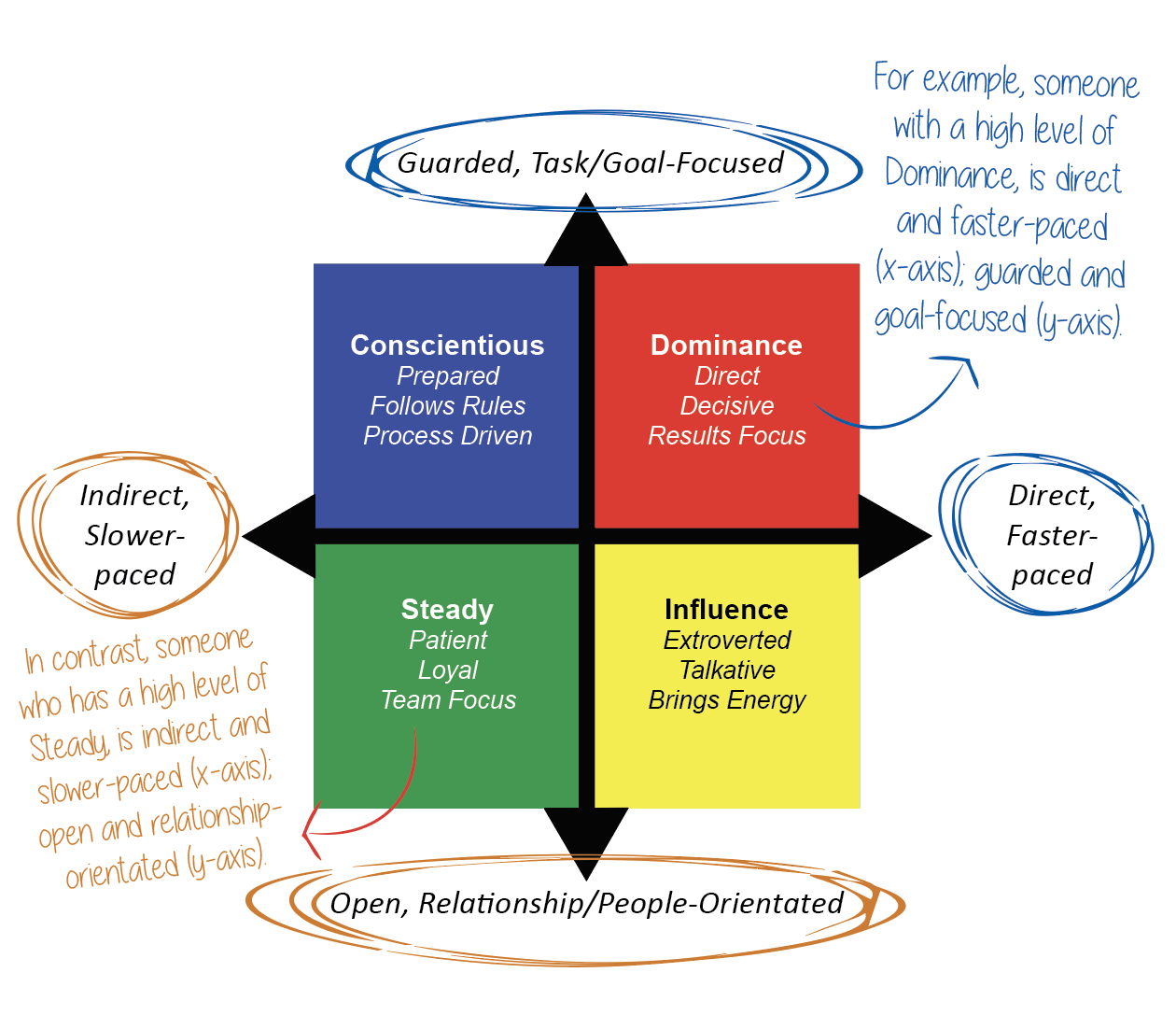
DISC measures the degree of Dominance, Influence, Steadiness, and Conscientious behavior. Everyone has their unique level of each behavioral style in the context of their role. The four-quadrant model explains the behavior of people with high degrees of D, I, S, and C.
Faster-paced and more direct behavior coupled with a goal orientation and guarded manner will indicate a likely Dominance or ‘D’ Style.
Faster-paced and more direct behavior coupled with a people orientation and open manner will indicate a likely Influence or ‘I’ Style.
Slower-paced and less direct behavior coupled with a people orientation and open manner will indicate a likely Steady or ‘S’ Style.
Slower-paced and less direct behavior coupled with a task orientation and guarded manner will indicate a likely Conscientious or ‘C’ Style.
THE SBR MODEL
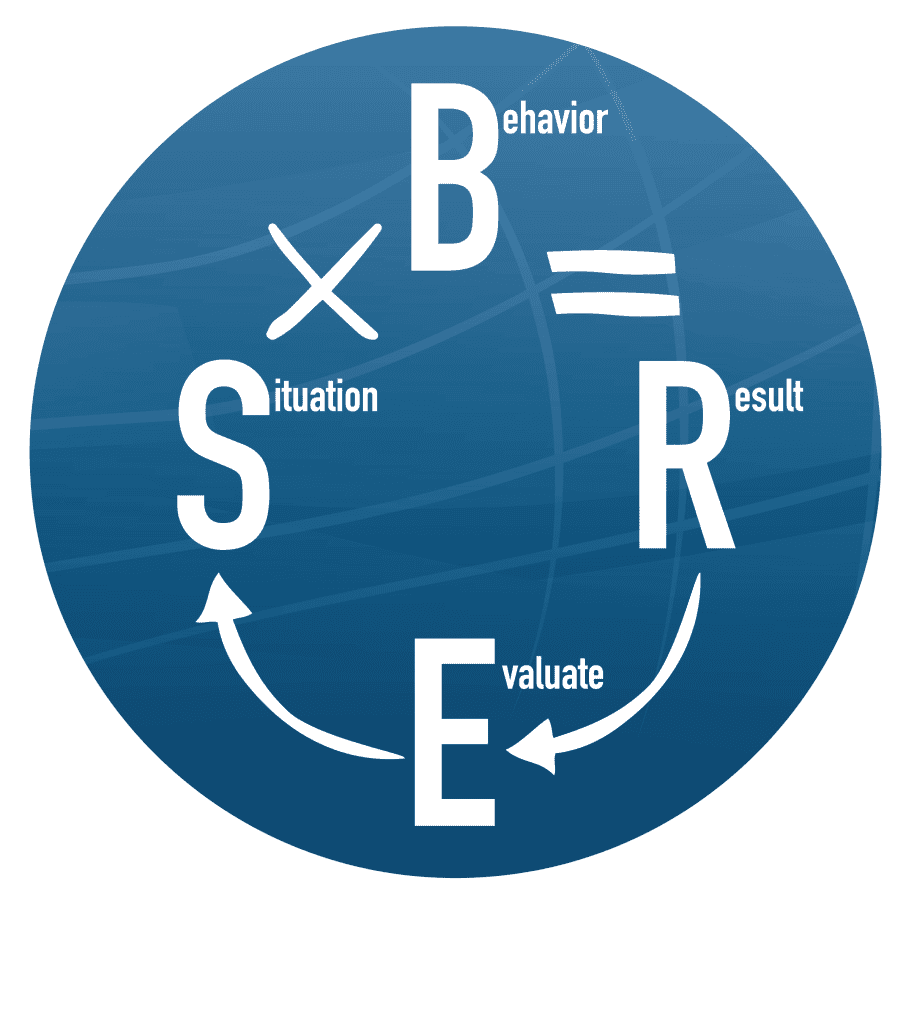
Life is full of diverse interactions, and success depends on understanding how to adapt behavior to different situations to achieve effective results. The Situation x Behavior = Result model emphasizes:
- Assessing the Situation
- Choosing the appropriate Behavior
- Evaluating the Result to learn and improve future interactions.
Using the DISC Profile, individuals can understand their preferred behaviors, which may work well in some situations but not in others. Awareness through DISC enables more thoughtful behavioral choices, leading to better outcomes and continuous improvement.
ACTIVITY: THE SBR MODEL
Refer to page 8 in the ‘Lead Yourself’ Workbook for this activity.
-
Write down three Situations you regularly encounter as a S&C Coach.
(For example: giving constructive feedback to an athlete) - What Behavior is required in these three unique situations in order to achieve a productive result?
- In each example, what Result are you looking to achieve?
- Evaluate and discuss your examples with others to compare Situations and Behaviors.
What’s the difference between your Natural and Adapted DISC Style?
No one naturally possesses all behaviors required to obtain great results in all situations. The most successful individuals are able to know what they do well and how to make necessary adaptations in order to suit the situation and changing conditions to obtain better results. Knowing the difference between your Natural and Adapted DISC Style is crucial for high-performance.
Natural DISC Style: This is your self-perception of the ‘real you’, your instinctive behaviors. These are behaviors you are most likely to exhibit when in situations you perceive as being stressful or in situations where you can simply do as you choose without having to please or consider anyone else. The reason this is described as the real you, is in the times just mentioned, your reaction and thinking times are either dramatically reduced or we literally do not have to think about adapting ourselves to suit anyone else. Hence, the real you emerges. This Natural Style tends to be fairly consistent even in different environments, that is, in and outside of your role in sport.
Adapted DISC Style: This is your self-perception of the way you believe you should behave in your role within the context of your current environment. This behavior may change in different environments, situations, and roles. For example, coaches responded to their surveys with a focus on their role as a coach and their Adapted Style would likely be different if they responded with a family focus. It makes sense that the behavior required to be successful in your role in sport (S for Situation) may and could be vastly different to the behaviors required to be a contributing member of your family. This links to the S x B = R model (see above).
ACTIVITY: YOUR LEADERSHIP STYLE
Complete this activity on page 13 of the ‘Lead Yourself’ Workbook. Following attending the first workshop, take a moment to describe your Leadership Style using what you learnt from your DISC Report.
For example: “I am a direct and decisive style of leader. I prefer to take action and confront situations on and off the field. I give immediate feedback which is to the point and at times I am maybe perceived as a bit abrupt or blunt. I like to push my team to raise the standards and set new goals…”
* The above is an extract from Bo Hanson’s Report and Style of Leadership…
MORE ABOUT THE DISC MODEL
Pace and Directness
Here’s how to identify behaviors in others based on their pace and level of directness.
Direct/Faster-Paced Behaviors
Frequently uses gestures and voice intonation to emphasize points, more likely to introduce self to others, frequent contributor in groups, less patient, expresses opinions readily, sustained eye contact.
Indirect/Slower-Paced Behaviors
Infrequent contributor in groups, reserves expression of opinions, more patient and cooperative, more likely to wait for others to introduce them, often makes qualified statements, infrequent use of gestures and little change in voice intonation.
Orientation and Openness
Look for these behaviors when working with others to determine their level of openness and focus.
Guarded/Task-Oriented Behaviors
Keeps feelings private, limited range of facial expressions, more formal and proper, avoids/minimizes physical contact, conversation stays on subject, speaks in specifics: cites facts and examples, goes with an agenda.
Open/People-Oriented Behaviors
Shows feelings and enthusiasm freely, more relaxed and warm, conversation includes digression, easy to get to know, initiates/accepts physical contact.
ACTIVITY: PICK A LEADER & TEAM MEMBER
Refer to page 16-19 of the ‘Lead Yourself’ Workbook for these activities.
- Select a leader you feel fits the description of each DISC style and provide a brief explanation of why you chose that person.
- Now, choose a team member you feel fits the description of each DISC style and provide a brief explanation of why you chose that person.
Digging deeper
One of the advantages of using the DISC framework is that as we master our understanding of it, we can delve deeply into the theory and application to quite complex levels, however at its core is a simple four quadrant model. The value of understanding the simple model has immediate benefit as you will have already recognized many of the behaviors in people you know.
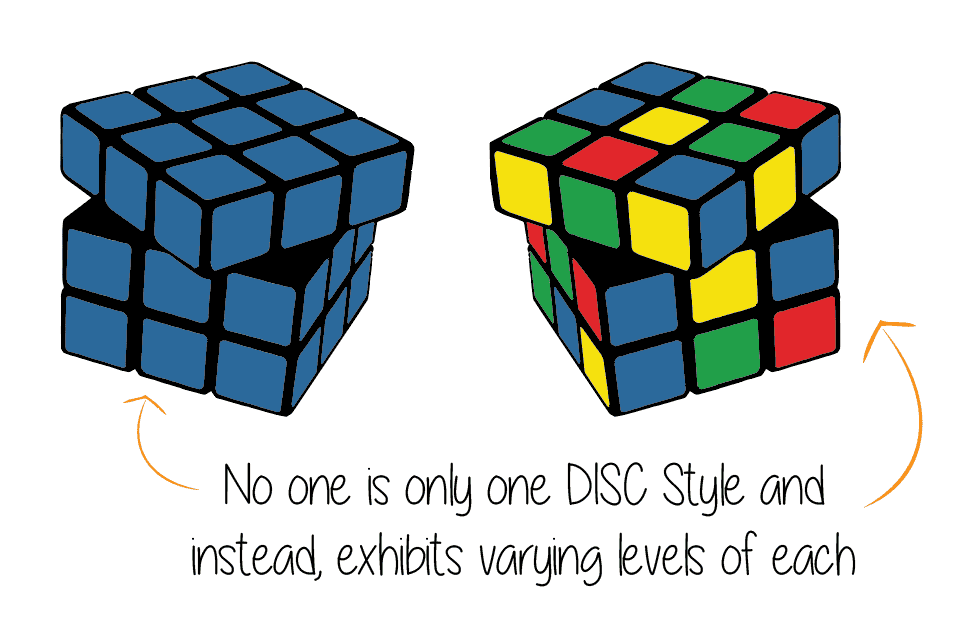
Like learning any new skill, we often exaggerate and isolate what we need to develop. Let’s take an example from track and field. One drill a sprint coach may use in training their athletes is running with high knees. This is an extreme, isolated element of the sprinting action. While you would never sprint with high knees (at that exaggerated level) in a race, practicing it allows you to develop that element of your sprinting technique. We can use this analogy in learning about DISC. We focus on the different behaviors associated with each of the D, I, S, and C factors as if they are the only behaviors present – we exaggerate and isolate the behaviors. But in reality, no one is only one DISC Style and instead, exhibits varying levels of each.
Watch the video below to dive deeper into DISC.
ACTIVITY: IDENTIFYING EACH STYLE AND HOW TO COACH THEM
Refer to page 24-34 of the ‘Lead Yourself’ Workbook for these activities. Read the overview for each DISC style, and describe how you would coach them based on their preferences, motivations, strengths, and potential limitations. Then, complete page 34 on how you would give feedback to an athlete based on their DISC Style.
HOW TO COACH YOURSELF
Refer to pages 35-36 of the ‘Lead Yourself’ Workbook. In this activity, think of an area of your leadership you would like to improve. Then set an improvement goal for yourself which will also add value to the organization you are part of. (An example could be improving the level of positive communication.) Once you have selected a goal, use your CoachDISC Profile Report to create a strategy to coach yourself. This means defining how you would coach yourself if you were your own coach.
The concept behind this activity is how high performance coaches and leaders understand how they need to be coached. This in turn, makes them more coachable and able to help their managers and others meet their needs.
- How will I structure this goal for it to be meaningful to me?
- Why did I choose this goal?
- What are the payoffs for achieving this goal?
- How will I measure my success and know if I have achieved it?
- How will I give myself information about this goal?
- How will I structure my practice sessions to reflect the style of coaching I require?
- What feedback will I seek and from who, to know if I am on the right track to my outcomes?
Give yourself a week to complete this activity and commence work on your performance improvement.