


E: Engage Others
Understanding Others and How to Lead Them
Engaging others involves building strong connections with clients, peers, managers, and others by understanding how to communicate effectively and form meaningful relationships. This requires recognizing and valuing the unique strengths and differences of each individual.
Leading others revolves around finding ways to engage and create connections with staff, athletes, clients, and others around you. Engaging relies on us developing relationships with different people. This means identifying how we communicate and build relationships with those on our teams including those who are potentially quite different to yourself.
The first workshop focused on the DISC model to lead yourself and building a thorough understanding of how you prefer to behave. This also gives you a foundation to understand how others behave. Using this understanding, effective leaders find a way to communicate with those they lead, in a way that resonates with them, motivates them, and inspires them. All incredibly valuable skills as a strength and conditioning coach. If you can do this as a leader, it enables you to be more effective in engaging with people, in many different settings. It goes further than this as well. It’s not just about understanding others. If you’re a leader of a team, you have to find ways to value people who are also part of your team. To truly engage with someone means that you don’t just understand and respect, but you value the contribution they make. This means recognizing their strengths and allowing them to play and carry out a team role based on those strengths. Just as critically, when we value someone, we notice how their differences help us be more effective as a team. Leaders need to foster and engage in this and help their team members (followers) to also value others.
Learning outcomes
- Utilize the DISC model to identify behaviors in others to develop effective ways to connect, engage, and communicate with them.
- Understand the importance and develop strategies around what leaders do to build a balanced coaching staff and value others within your teams.
- Further develop your understanding of your own leadership style and how to develop flexibility to maximize strength and conditioning outcomes.
- Learn and utilize a proven method for dealing positively with conflicts that can arise within coach-athlete interactions.
- Discover strategies for building rapport with athletes and clients while evaluating athlete/client-fit.
Download your Accompanying Workshop 2: Engage Others Workbook
E: Engage Others
Follow up to Workshop
After attending the live workshop, let's recap key themes and start to apply your knowledge to engaging others.
Valuing Diversity
Effective leaders find a way to communicate with others, in a way that resonates with them, motivates them, and inspires them. If you can do this as a leader, it’s going to make you effective in engaging with people.
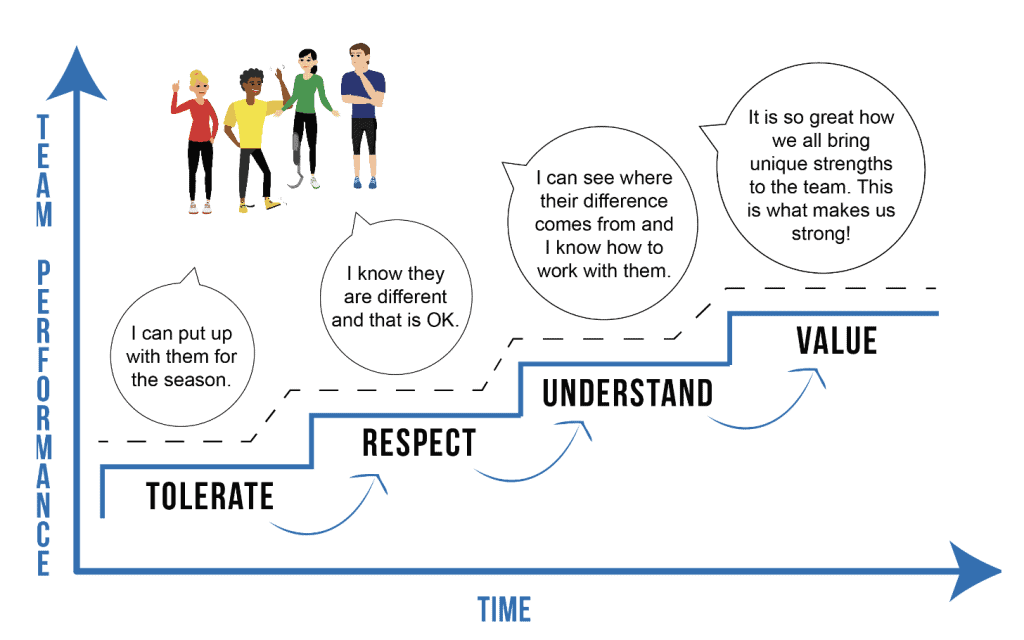
It’s not just about understanding the people you work with. If you’re a leader of a team, you have to find ways to VALUE them. To truly engage with someone means that you don’t just UNDERSTAND or RESPECT, but you actually VALUE the contribution they make to the team.
This means recognizing their strengths and allowing them to play and carry out a role based on those strengths. Just as critically, when we value someone, we notice how their differences help us be more effective within our dynamic. Leaders need to foster and engage this diversity and help their team members (followers) to value this diversity as well.
ACTIVITY: YOUR LEADERSHIP STYLE
What can you do as a leader to foster diversity and valuing others within your team? Complete this activity on page 3 of your ‘Engage Others’ workbook.
communication with different DISC Styles
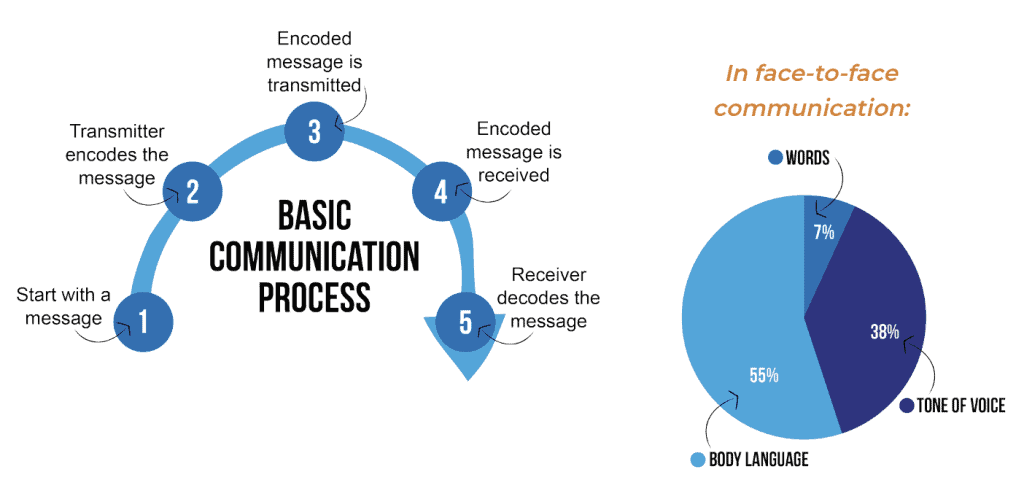
At the core of every relationship is communication. Your ability to communicate well with others determines the results you create in your role. As a Leader, if you cannot communicate well with those around you, you will struggle to have influence and achieve effective results.
Communication is the most fundamental element in building relationships with others. It is what makes the critical difference.
Communication determines not only whether what you say is heard, but whether what you say is understood. So what makes for effective communication?
The most effective communication is tailored specifically to the person you are communicating with. You need to keep in mind their DISC Style and your own.
ACTIVITY: COMMUNICATION STYLES & PLANS
Complete the activity on page 5 of your ‘Engage Others’ workbook. Take a moment to think, then describe how you prefer to communicate with others. What is your communication style?
Now that you have outlined your own communcation style, complete pages 6-9 to develop communication plans for each of the four primary DISC styles.
leadership Flexibility
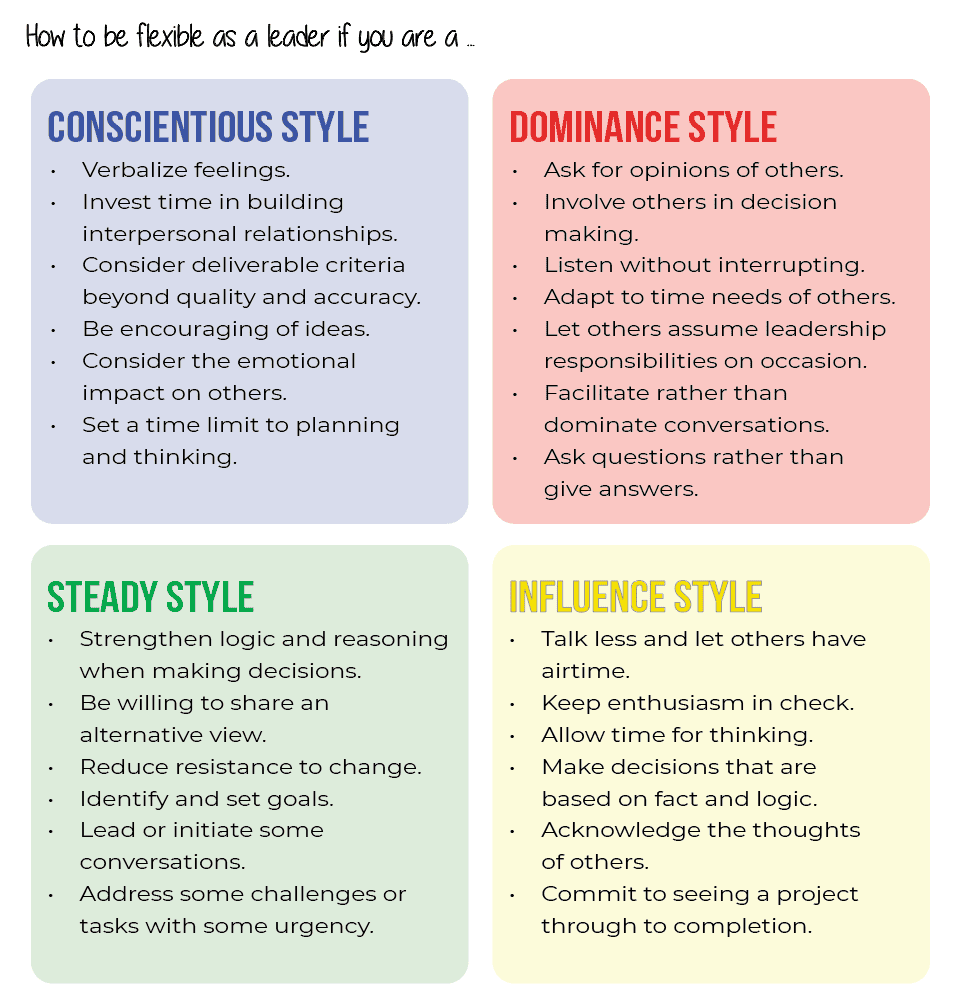
Leadership flexibility is necessary to build rapport with those you work with who are different (or similar) to yourself and for creating effective relationships. This table helps you to understand the kinds of adaptations each style needs to make when dealing with other styles.
ACTIVITY
Write down three leadership actions on page 11 of your ‘Engage Others’ workbook to be aware of based on the Basic Communication Process model (above).
Leading Different Styles of Team Members
As a leader your role is to help others develop. This means helping team members to overcome some behaviors which, if done too often, negatively impact the team’s performance. Review page 12 and then complete the below activity.
ACTIVITY
Choose a client or someone you work closely with and create a strategy to develop an aspect of their behavior so they can be more effective in their team or role. Write your strategy on page 13 of your ‘Engage Others’ workbook.
Case studies: Observing Behaviors to Identify a DISC Style
On pages 14-21 of your ‘Engage Others’ workbook, use the information provided to identify what DISC Style each person being described is and complete the case study questions for each example.
- What DISC Style is the individual?
- What behaviors suggest this to be the case?
Critical Relationships
Within every team or high-performance environment, strong and productive relationships are critical. However, what we have also noticed is that there are also critical relationships within a wider team dynamic. For example, if we think about a Baseball team, the relationship between the catcher and the pitcher has to be of the highest level of understanding.
Every sport has similar dynamics where specific relationships must operate at a higher level. As a Strength and Conditioning coach, your critical relationships may include those with your athletes, head coach, specialist coaches, or medical and physiotherapy staff, where alignment directly impacts performance, load management, and availability.
ACTIVITY
Refer to page 22 of your ‘Engage Others’ workbook. In this activity, identify one person with whom you have a critical working relationship and where a stronger understanding would enhance your effectiveness. Over a set timeframe (e.g., 2–7 days depending on your schedule), share your CoachDISC Profile Reports with each other (or share yours if they have not completed one) and identify practical strategies to improve how you communicate, plan, and make decisions together.
Focus specifically on how differences in behavior, communication style, and approach to training or performance may influence your working relationship. Finally, translate these insights into clear, actionable steps that will positively impact your training environment and ultimately contribute to improved on-field performance and athlete outcomes.
At the conclusion of the activity, reconnect with your partner to review your insights, key learnings, and agreed actions moving forward.
Managing Conflict Using DISC
In the pressure cooker environment of elite sport, conflict is bound to occur and necessary for success. A lack of conflict is more concerning than too much. As a strength and conditioning coach, you need to understand the best way to recognize and manage conflict in a way that results in a positive outcome.
What causes conflict?
- Conflict can arise when there are differences in goals, strategies and game plans, interests, desires, opinions or values.
- Conflict may also arise as a result of a personal dislike between team members.
Conflict usually arises when:
- The stakes are high (competition phases of season)
- Emotions are heated (competition, fatigue and high academic demands create stress)
- We need to build our resilience to these factors and keep our composure. This reduces the possibility of ‘Losing it’.
So how do you manage conflict? And why should you? Managing conflict is about attempting to find the most ‘positive outcome’ for both parties. Remember, conflict is not always negative and some great outcomes can be achieved when conflict is handled in a skillful manner. Essentially, effective conflict management is about improving communication with those around you.
Conflict doesn’t just happen. It tends to build over time. Small frustrations add up and people lose their desire to adapt to others. This escalates and overt conflict is the result. As a leader, you have a critical role to keep others in check and manage the small signs of conflict before they turn into relationship ending fights.
Conflict Cues
- Noticing the signs of conflict.
- Take action before it escalates.
Conflict Levels
- Each interaction has a different degree of impact.
- Not all difficult interactions are worth confronting.
- Concentrate on addressing those behaviors which are affecting your team’s performance.
- Out of character behavior – may be best to simply let it go, as confronting it may have an even worse effect, especially if they were just having a bad day.
Review pages 23-26 of your ‘Engage Others’ workbook and complete the activities as you read through the content.
DISC Style Compatibility
Your experience of interacting with many people in your life means you have experienced some people you get along with, and others you do not. We often dismiss this as either ‘personality clashes’ or that they are just ‘different’ to me, and often we blame the other person. When we think about what causes us to experience these interactions, the DISC model helps us to understand why certain styles are more or less compatible when interacting or working together. It is most critical to see ‘clashes’ as behavioral, as behavior can be modified while personality cannot.
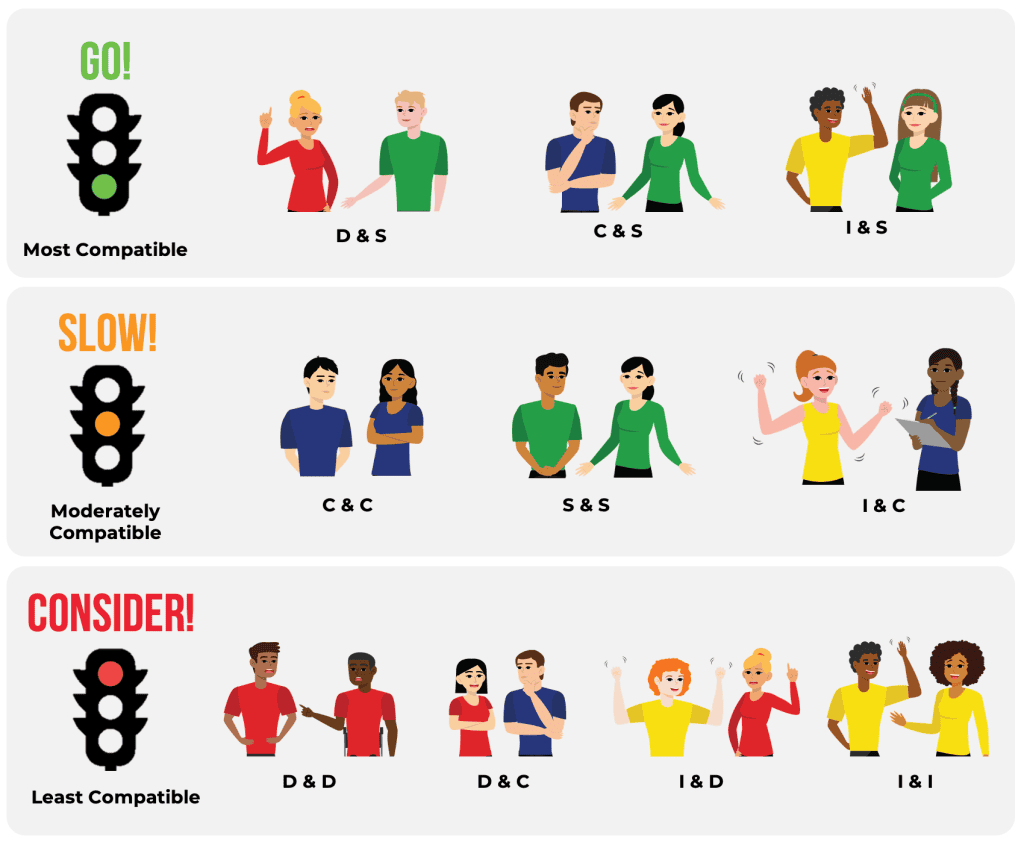
Here is a chart describing the most to least compatible styles. It is important to note this does not mean these styles cannot work with each other. It means quite the opposite, as diversity is a crucial attribute of a high performing team. It does explain however, if team members are unaware of or not prepared to adapt the impact of their style, why they may be less effective when working with other certain styles.

When reviewing these relationships you should consider the common conflicts certain styles have with others, and then choose how each style needs to adapt in order to have more productive relationships with others.
Think about what each style prioritizes, and the pace at which they like to interact or work.
ACTIVITY
Use the DISC Compatibility Chart to identify any likely conflicts in your facility or team, write down your thoughts on page 29 of your ‘Engage Others’ workbook.
Dealing with Conflict Using Critical Conversations
Here is a proven method of dealing positively with conflict. Take a moment to review the steps and discuss with others how you could use this model. Use this model to practice role-playing potential conflicts that may occur in your role and facility.
STATE My Path
If you notice that the other party is feeling threatened, take steps to make them feel safe. Do not continue your conversation until they feel safe.
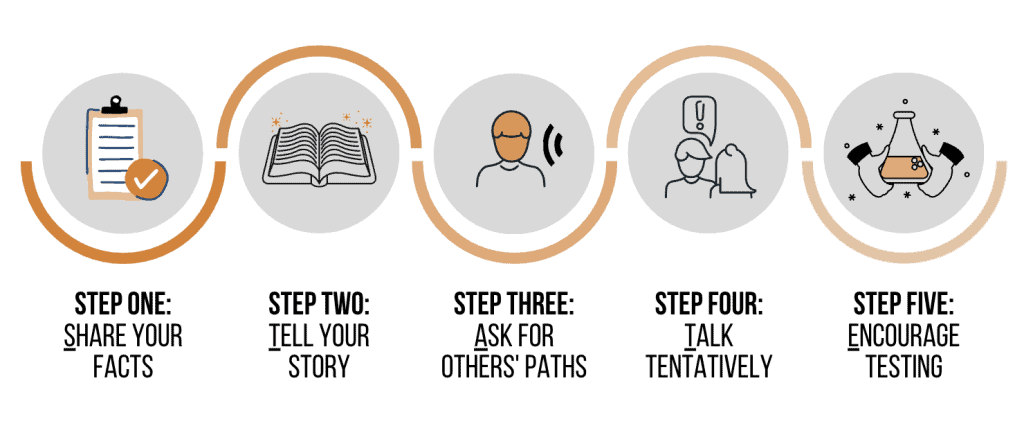
dealing with conflict using the state my path model
Review the steps of the STATE My Path model and complete the activities on pages 30-33 of your ‘Engage Others’ workbook.
- Consider a conflict from the past and how you would manage the interaction using these 5 steps.
- Consider a conflict likely to occur in the near future and how you would manage the interaction using these 5 steps.